
The transformation of a raw coil of steel into a precision kitchen instrument is a journey of extreme pressure, intense heat, and meticulous assembly. While we often take the humble kitchen knife for granted, the industrial process behind its creation is a masterclass in modern manufacturing, blending heavy-duty metallurgy with delicate hand-finishing.
Based on the glimpses into the factory floor, here is the step-by-step journey of a knife, from raw material to the culinary front lines.
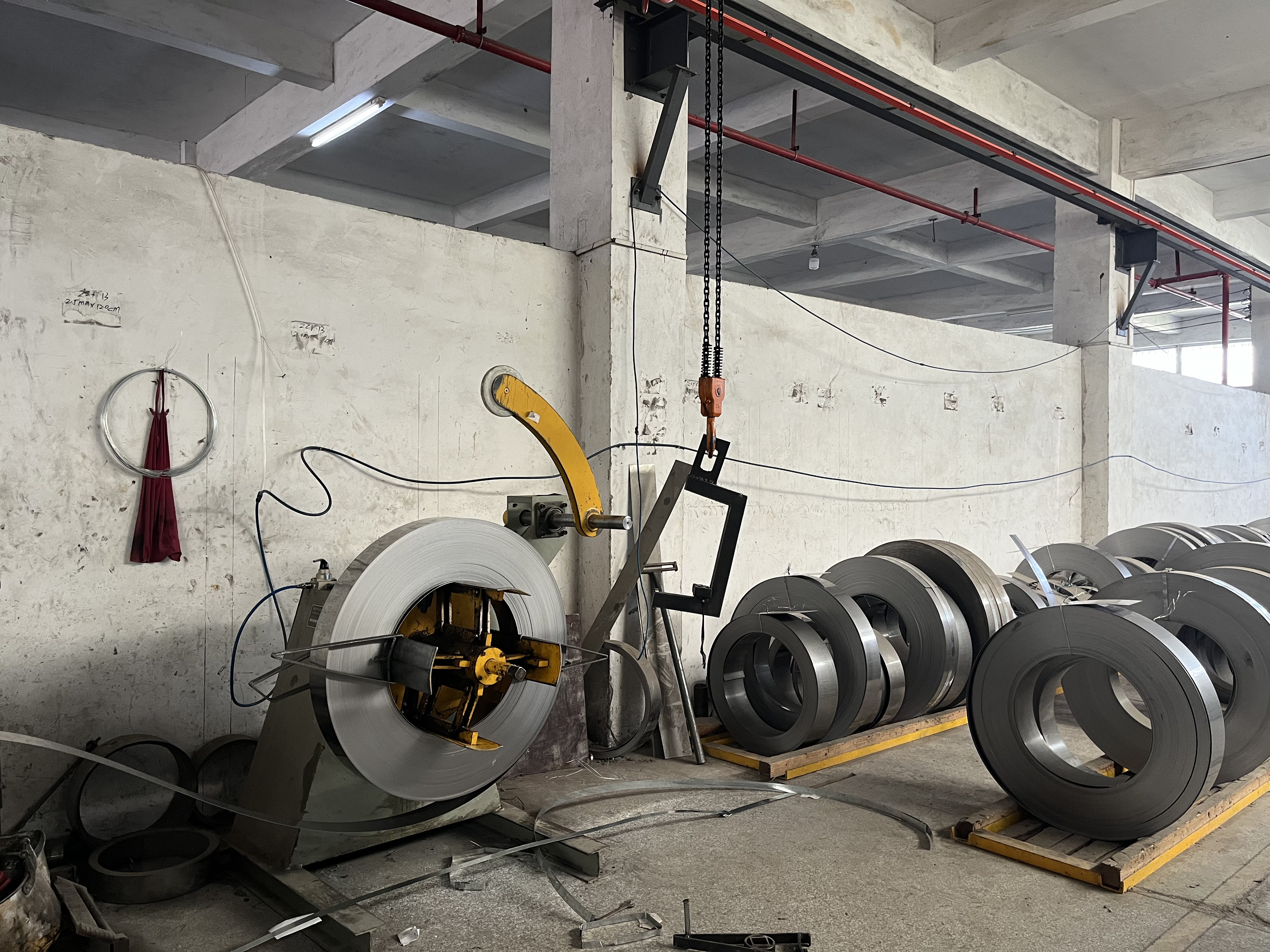
The process begins with massive coils of stainless steel (as seen in image). These coils are selected based on their alloy composition—typically a balance of carbon for hardness and edge retention, and chromium for corrosion resistance. These heavy rolls are fed into de-coiling machines that flatten the metal, preparing it for the first stage of transformation.
Once the steel is leveled, it moves to the punch press station. Here, massive industrial presses exert tons of force to "stamp" the knife silhouettes out of the steel sheet. This is known as blanking.
The Skeleton: Image shows the "skeleton" scrap left behind—the negative space from which the blades were birthed.
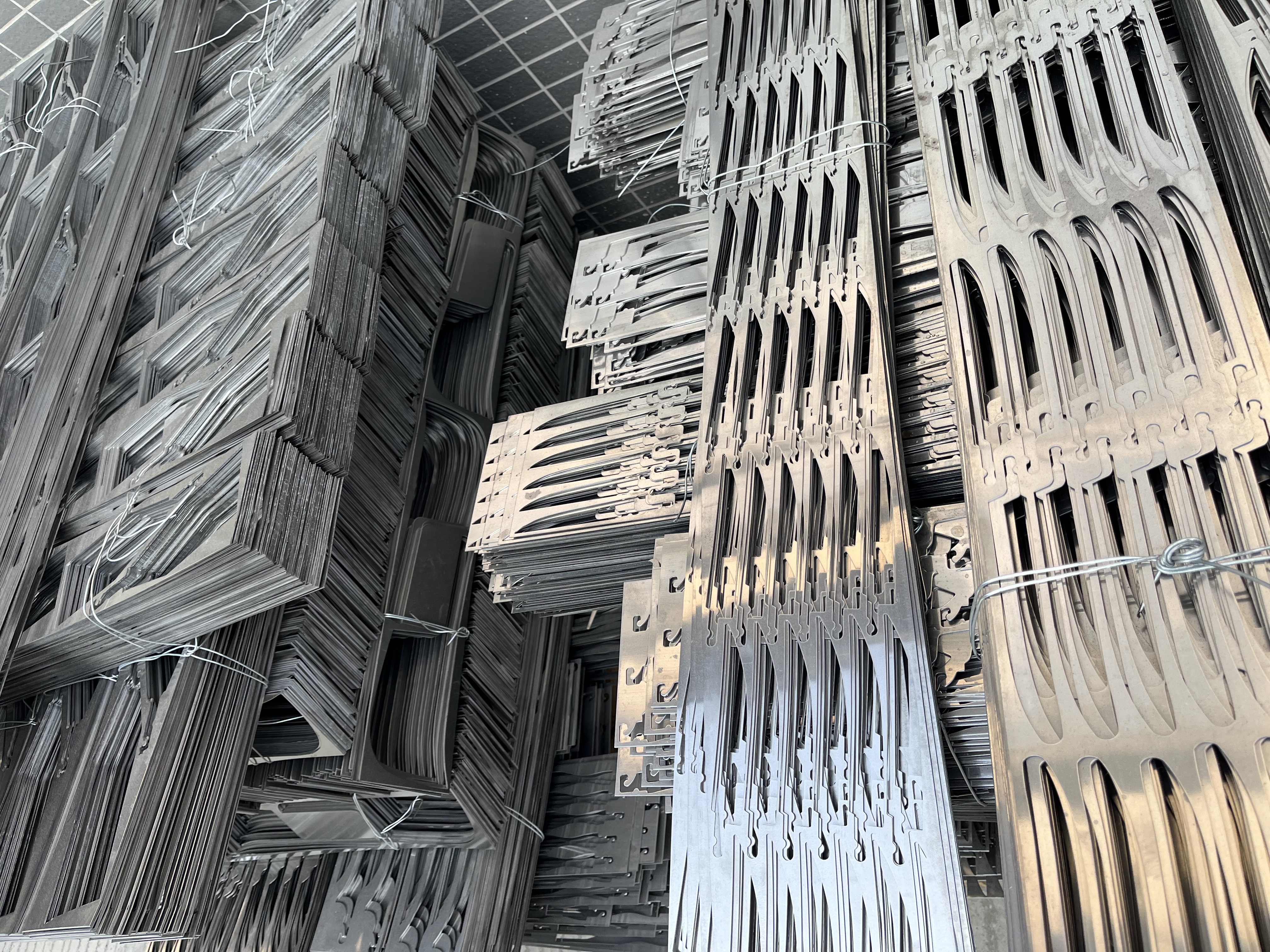
The Blanks: Thousands of rough-edged "blanks" are collected in bins. At this stage, they look like knives but lack an edge, a handle, or the structural integrity required for cutting.
After stamping, the blanks are rough and uniform in thickness. To become a cutting tool, they must undergo grinding.
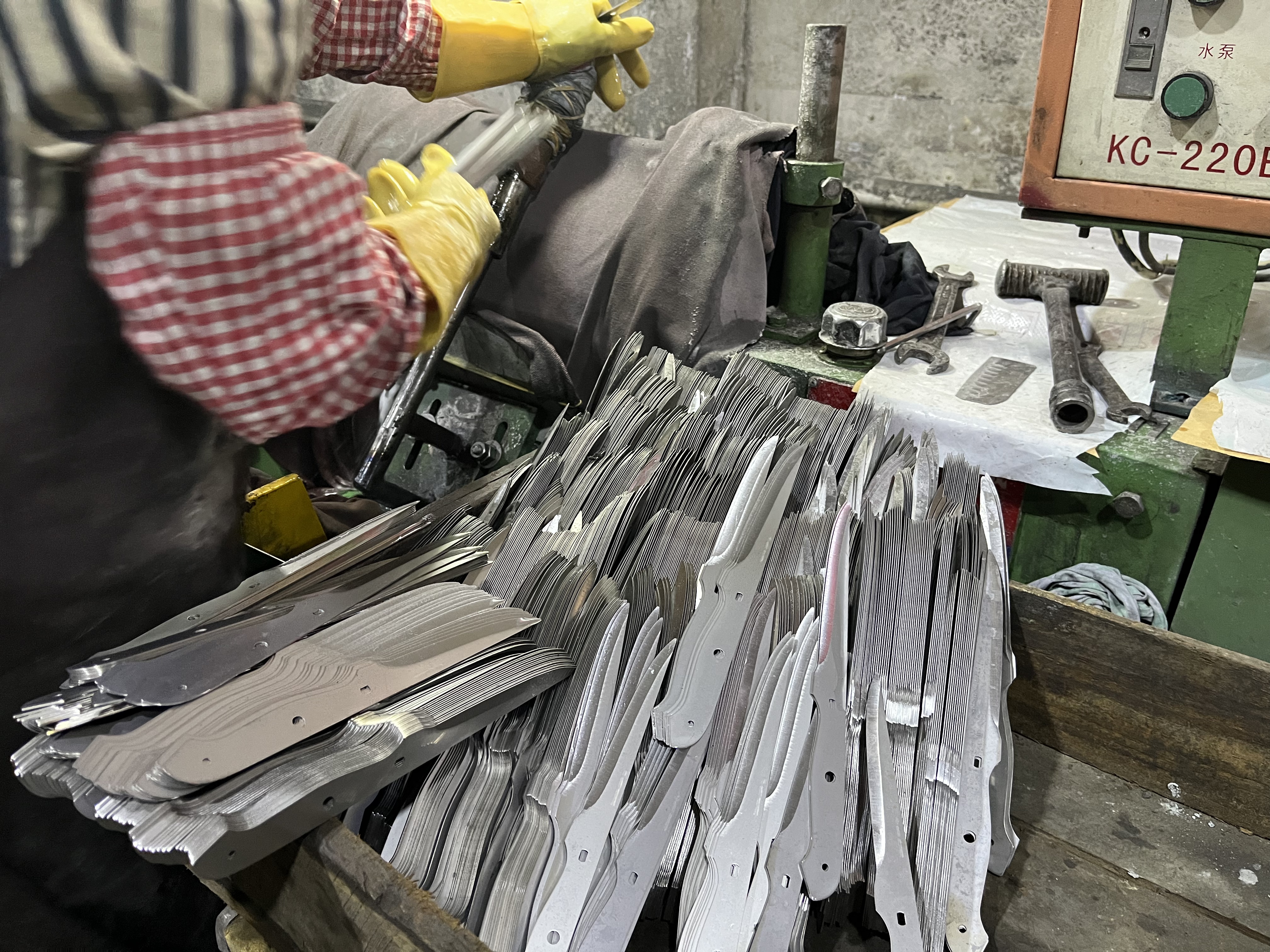
The Taper: Workers or automated machines grind the metal to create a "taper" from the spine to the edge.
The Bevel: This stage is critical for determining the knife's geometry. A worker, often wearing heavy protective gear and waterproof aprons, guides the blades against abrasive belts to refine the profile. The presence of water and specialized gloves suggests a "wet grinding" process, which prevents the steel from overheating and losing its molecular properties.
A knife is only as good as its "temper." The image reveals an automated thermal processing line. The blades are moved via a conveyor system through a series of controlled environments.
Hardening: The steel is heated to a critical temperature (often above 1,000°C) to rearrange its internal structure.
Quenching: The blades are rapidly cooled in oil or water to "lock" that hardness in place.
Tempering: Because quenched steel is brittle like glass, the blades are reheated at a lower temperature to restore toughness, ensuring the knife can flex without snapping.
While the blades are being treated, a parallel process occurs for the handles. Image below highlight the plastic injection molding department.
The Molds: shows racks of heavy steel "dies" or molds. Each mold is specific to a handle design.
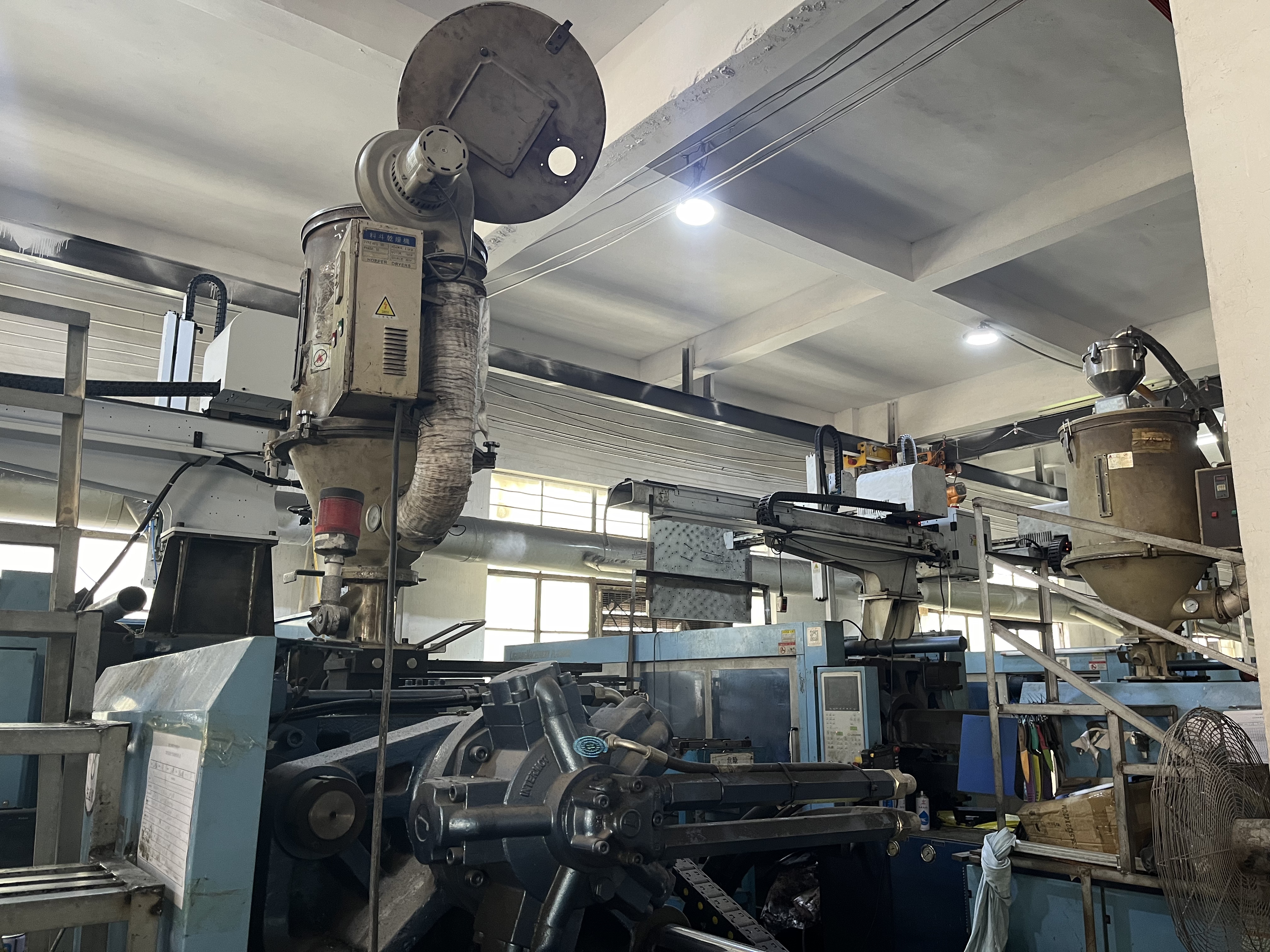
The Machine: In image, large injection molding machines melt polymer pellets (like POM or polypropylene) and inject them into the molds under high pressure. For many modern knives, the blade's "tang" (the metal extension of the blade) is placed directly into the mold, and the handle is molded around it for a seamless, sanitary fit.
The final stage takes place in the assembly and packing hall (seen in the image). This is where the two primary components—the finished blade and the ergonomic handle—meet.
Riveting and Polishing: If the handle is not molded directly, workers manually fit handle scales and secure them with rivets. The handles are then buffed to ensure a smooth, comfortable grip.
Final Sharpening: The "factory edge" is applied. This is often the first time the knife is truly sharp.
Manual Inspection: Workers meticulously inspect each piece for "burrs," scratches, or misalignments. They wipe down the blades and organize them into batches for packaging.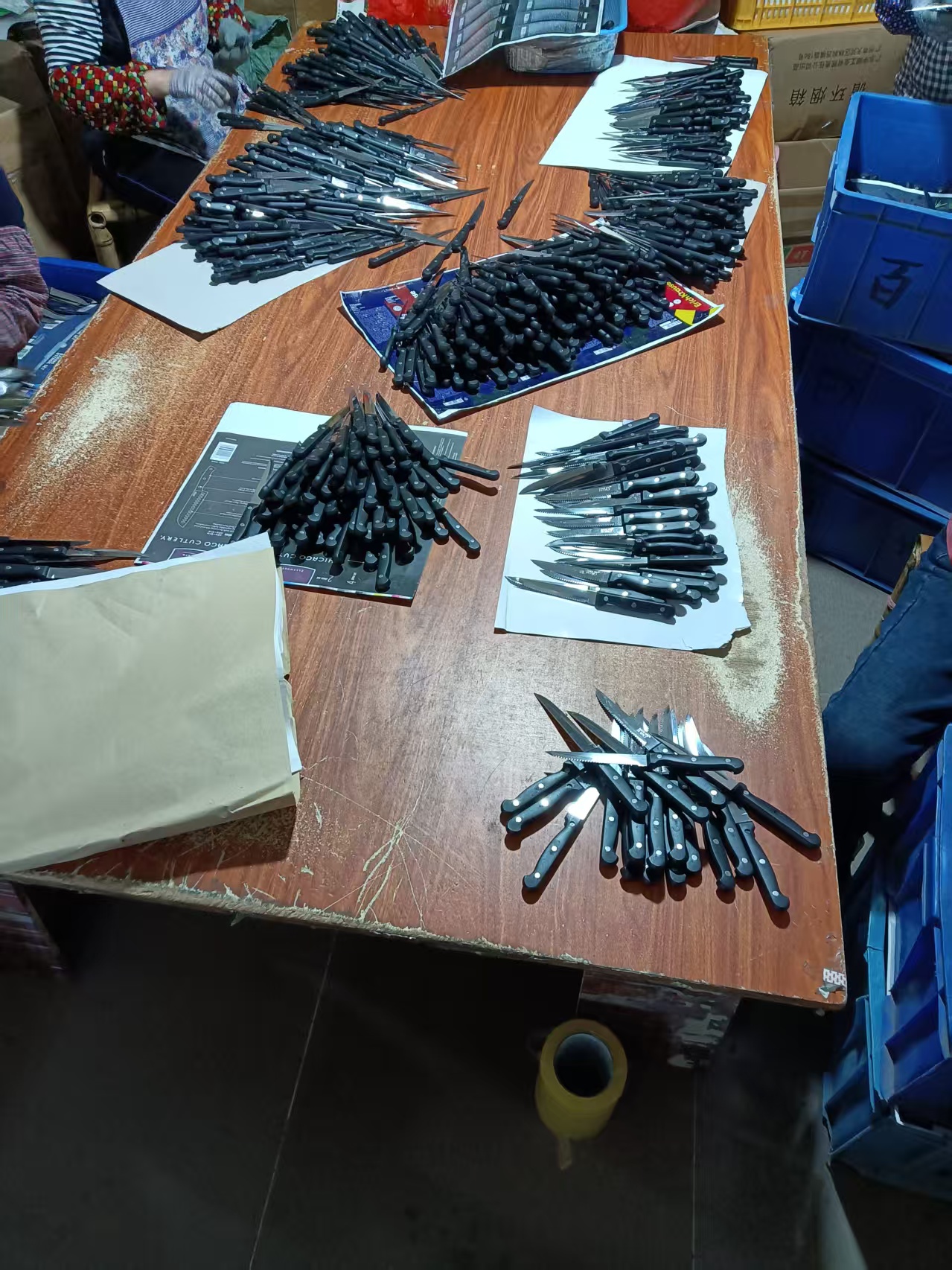
The Intersection of Man and Machine
What is most striking about this process is the scale. From the bins overflowing with steel blanks to the walls of molds, this is an environment designed for consistency. By the time these knives reach a kitchen, they have been pressed, ground, scorched, and scrutinized.
The transition from the heavy, oily environment of the stamping press to the clean, organized assembly tables mirrors the journey of the tool itself: starting as a raw, industrial slab and ending as a refined instrument of precision.


